Should Eggs Be Refrigerated? A Louisiana Guide to Farm-Fresh Eggs
One of the most common questions Louisiana Farm Food receives from readers is:
“Do eggs really need to be refrigerated?”
It’s a question that sparks surprisingly strong opinions, especially among people interested in local food, backyard chickens, pasture-raised eggs, and traditional food preparation.
If you’ve ever traveled outside the United States, you’ve probably noticed eggs sitting on store shelves without refrigeration. Yet here in Louisiana, nearly every carton in the grocery store is found in a refrigerated cooler.
So who’s right?
As with many food questions, the answer depends on where the eggs came from, how they were handled, and whether the shell remains intact.
The Egg’s Natural Protection System
Every freshly laid egg comes with a remarkable protective coating known as the bloom (sometimes called the cuticle).
This invisible layer covers the shell and helps seal thousands of tiny pores that naturally exist in every egg.
The bloom helps reduce moisture loss and provides protection against bacteria entering the shell.
For generations, families collected eggs from farms and backyard flocks and stored them in cool kitchens, pantries, and root cellars without refrigeration.
In many parts of the world, eggs are still sold this way today.
Why Grocery Store Eggs Are Refrigerated
In the United States, commercial eggs are typically washed before being sold.
While washing removes dirt and debris, it also removes much of the egg’s natural bloom.
Once that protective layer is removed, refrigeration becomes much more important.
This is why the FDA recommends storing eggs at 40°F or below and why conventional eggs remain refrigerated throughout the supply chain—from the packing facility to the grocery store and ultimately to the consumer’s refrigerator.
For eggs traveling through a large-scale food system, refrigeration plays an important role in preserving quality and safety.
What the FDA Recommends
The FDA’s guidance is straightforward: refrigerate eggs and keep them cold.
That recommendation is designed to apply broadly across the entire food system, especially for commercially produced eggs that have been washed and transported through multiple stages before reaching consumers.
From a public-health perspective, refrigeration is a practical recommendation that works for millions of consumers.
But many people interested in local food wonder how those recommendations apply to farm-fresh eggs gathered directly from healthy hens.
A Practical Rule Many Farmers Follow
While opinions vary, many experienced egg producers follow one simple rule:
If an egg has any crack at all—even a tiny hairline crack—it should be refrigerated.
A cracked shell compromises the egg’s natural protection and can allow moisture and bacteria to move through the shell more easily.
These eggs are best refrigerated and used promptly.
For eggs with clean, intact shells, the conversation becomes more nuanced.
The condition of the shell matters. The condition of the bloom matters. And perhaps most importantly in Louisiana, the storage environment matters.
Louisiana Is Not Vermont
One challenge with internet advice is that much of it comes from places with very different climates than Southeast Louisiana.
A farmhouse pantry in Vermont during spring is not the same as a kitchen in New Orleans during August.
Heat and humidity accelerate aging in nearly every food product, including eggs.
For Louisiana families, practical considerations include:
- Keeping eggs out of direct sunlight.
- Avoiding storage near ovens and stoves.
- Using cracked eggs promptly.
- Refrigerating eggs when uncertain about their handling history.
- Recognizing that refrigeration can help preserve freshness during the hottest months of the year.
The goal isn’t simply preventing spoilage. It’s preserving freshness, flavor, and quality.
Why Fresh Eggs Cook Differently
People who try truly fresh eggs for the first time often notice something immediately.
The yolks stand taller.
The whites stay together.
The egg doesn’t instantly spread across the skillet.
That’s because fresh eggs behave differently than older eggs.
As eggs age, moisture and carbon dioxide gradually escape through the shell. The whites become thinner and the yolk begins to flatten.
This is one reason many home cooks become passionate about sourcing fresh eggs directly from local farms whenever possible.
Why Chefs Seek Out Fresh Pasture-Raised Eggs
Few cities appreciate great ingredients more than New Orleans.
Professional chefs understand that ingredient quality affects everything from flavor to presentation.
Fresh pasture-raised eggs are often prized because they provide:
- Richer flavor
- Darker yolks
- Better poaching performance
- Improved baking structure
- Superior emulsification for sauces and dressings
Whether preparing hollandaise, mayonnaise, fresh pasta, crème brûlée, bread pudding, or simply frying an egg for breakfast, freshness matters.
That is one reason many chefs throughout New Orleans, Metairie, Covington, Mandeville, and surrounding communities seek out local farms whenever possible.
One Louisiana Farm Producing Pasture-Raised Eggs
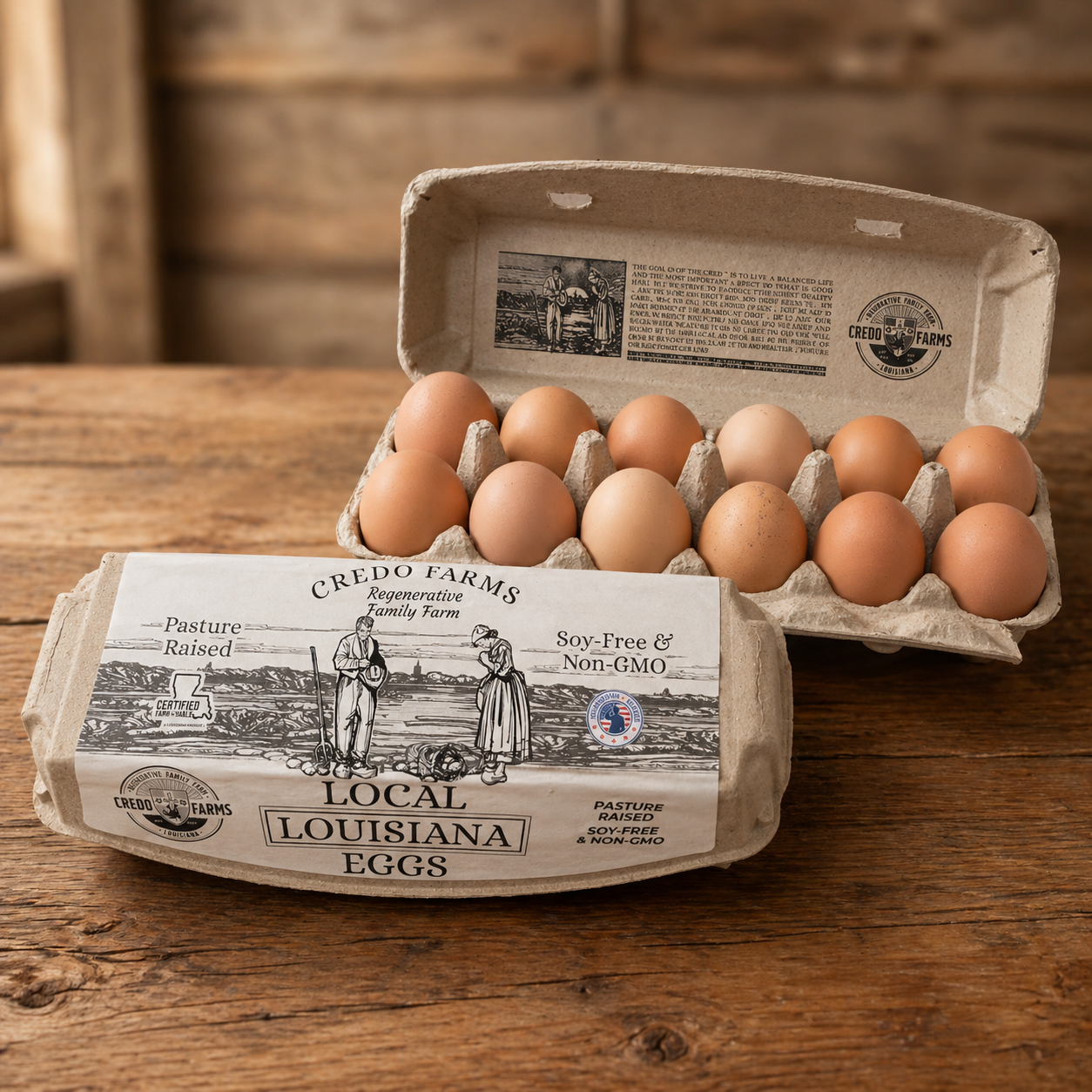
One farm that has built a strong following among families and chefs throughout Southeast Louisiana is Credo Farms, located in Amite, Louisiana.
The farm raises hens on pasture where they can forage, scratch, hunt insects, and express their natural behaviors.
Customers purchasing pasture-raised eggs from Credo Farms frequently describe darker yolks, firmer whites, stronger shells, and noticeably better flavor than conventional grocery store eggs.
Many consumers first discover the farm while searching online for:
- Pasture-raised eggs New Orleans
- Farm fresh eggs near me
- Local eggs Louisiana
- Pasture-raised eggs Covington
- Where to buy eggs near New Orleans
- Fresh eggs delivered in Louisiana
For consumers interested in learning more about the farm’s practices, products, and delivery options, additional information can be found at:
The farm’s pasture-raised egg page can be viewed here:
So, Should Eggs Be Refrigerated?
The practical answer is:
Cracked eggs should always be refrigerated.
For eggs with strong, intact shells, storage conditions, temperature, and handling all play important roles.
Refrigeration remains an excellent tool for preserving freshness, particularly during Louisiana’s long, hot summers.
Understanding why eggs are refrigerated—and why they weren’t always refrigerated—helps consumers make more informed decisions about the food they bring home.
Perhaps more importantly, it encourages people to learn where their food comes from and to build relationships with the farms producing it.
Final Thoughts
A fresh egg from a healthy hen is one of nature’s most remarkable foods.
Whether purchased from a grocery store, a farmers market, or directly from a local farm, understanding how eggs are produced and handled helps consumers get the most from them.
For Louisiana families interested in fresh, local food, that knowledge can make all the difference.